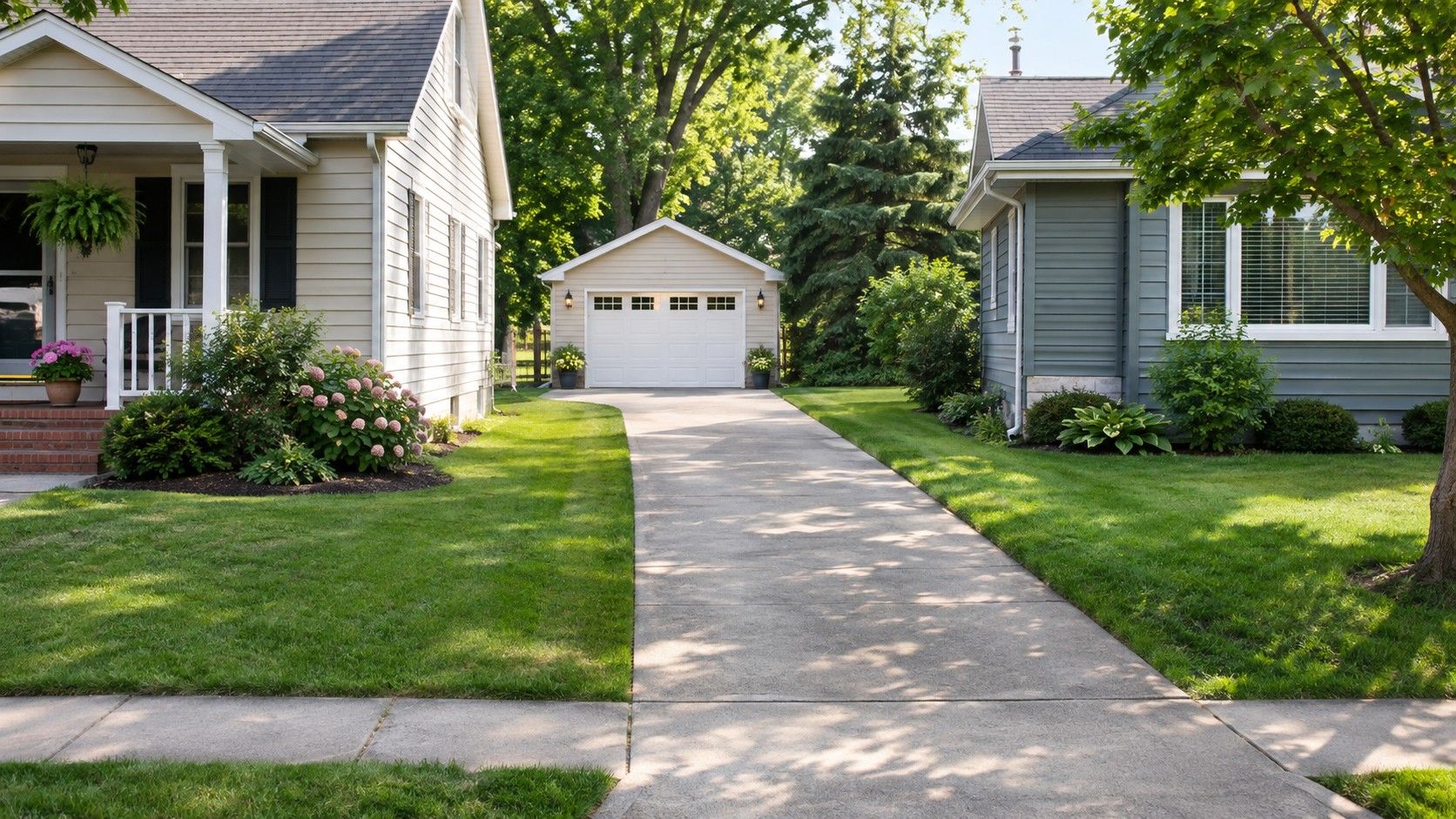
A neighbor can have a right to cross land without owning it. A creditor can have a claim against land without a right to drive across it. Easements and liens are both encumbrances, yet they burden ownership in different ways. Read the right being asserted before choosing a term, then identify which parcel, person or debt the right follows.
Ask whether the claim is use or payment
An easement is generally a nonpossessory right to use another person's land for a defined purpose. A driveway crossing is a common example. A lien is a claim or charge securing payment or an obligation. A mortgage lien concerns security for debt, not ordinary permission to occupy or cross the property. If the stem describes a route, utility installation or access use, start with an easement analysis; if it describes unpaid money secured by property, start with a lien analysis.
An encumbrance is a broad category, not an automatic indication that a property cannot be sold. Some burdens remain with the land after a transfer. Others may be released or satisfied at closing. A recorded access easement can be entirely expected in the property's use, while an unpaid judgment lien can raise a different closing issue. Do not equate every burden with a defect that makes ownership impossible.
Voluntary and involuntary describe how a lien arises. A borrower may voluntarily grant security for a loan. A tax lien or judgment lien arises through a different process. General and specific describe the reach of the claim. Those are separate classifications: a lien can be specific without being voluntary. When answer options mix the two pairs, test each adjective against the facts rather than selecting a familiar combination.
Trace an appurtenant easement across parcels
An easement appurtenant benefits a parcel, called the dominant estate, and burdens another, called the servient estate. The dominant parcel receives the use benefit. The servient parcel provides the land over which the right is exercised. These words describe the easement relationship; they do not mean the dominant owner has general control over everything on the neighboring parcel.
Suppose Lot A has an established right to use a driveway over Lot B to reach a road. Lot A is dominant for that right, and Lot B is servient. Selling Lot B does not necessarily extinguish the easement. The relevant documents and law determine how the burden and benefit continue. An answer suggesting that a new owner can automatically cancel every preexisting easement is too broad for the stated general principle.
An easement in gross generally benefits a person or entity rather than a dominant parcel. Utility easements are a familiar context, though their transfer and scope depend on the arrangement. Do not create a dominant estate merely because a company owns land somewhere else. Ask what the grant actually benefits. A personal or commercial use right can have a different structure from access that exists for the benefit of a specified neighboring parcel.
Do not treat every boundary problem alike
An encroachment is a physical intrusion, such as a fence or building extending across a boundary. It is not automatically a valid easement. A question may describe the physical fact without establishing any legal right to maintain it. Avoid treating long use as proof of a prescriptive easement unless the stem supplies the required elements or the applicable rule. Permission, duration, adversity and other requirements matter.
A license is generally permission to do something on another's land and is often distinguished from an interest in land. Its revocability and exceptions depend on the circumstances. A casual invitation to park for an afternoon should not be equated with a recorded permanent access easement. Watch whether the question supplies a formal grant, a continuing parcel benefit or only permission for a temporary activity.
Termination also requires facts. Merger, release, expiration or another recognized basis may end an easement in the appropriate circumstances. Simple nonuse does not support every claimed termination. If the answer options say “automatically ends when the servient parcel is sold” or “always ends after one unused year,” look for a rule in the stem before accepting them. Exact prescriptive periods, lien priorities and statutory deadlines are state-specific study material.
Work an original encumbrance question
Original practice situation: A recorded instrument gives the owner of Parcel North a driveway right across Parcel South to a public road. The right exists for the benefit of Parcel North, and no debt is involved. Which description fits? A: A general lien against Parcel North. B: An appurtenant easement with North dominant and South servient. C: A lease transferring possession of all of South. D: A mortgage securing access payments.
B matches both the purpose and the parcel relationship. A introduces payment security that the facts exclude. C substitutes possession of the whole property for a limited use right. D invents a debt. The wording “for the benefit of Parcel North” is doing important work: it points to an appurtenant relationship rather than merely a right held by a named individual.
Now replace the driveway right with a contractor's unpaid bill and a properly established statutory claim against the improved property. You would analyze a lien, not an access easement. Replace it instead with a garage wall physically extending over the boundary, with no right established. You would first identify an encroachment. These variations show why memorizing a single list of encumbrances is insufficient. Underline the action the claimant can demand: use the land, collect secured payment or object to a physical intrusion. Then explain the classification using only rights actually supplied in the scenario. A diagram of two rectangles labeled by parcel can help, but it must follow the legal facts rather than create them.